Garden journal / Stone & paving
Choosing natural stone
Compare limestone, sandstone and granite for the character of your garden.
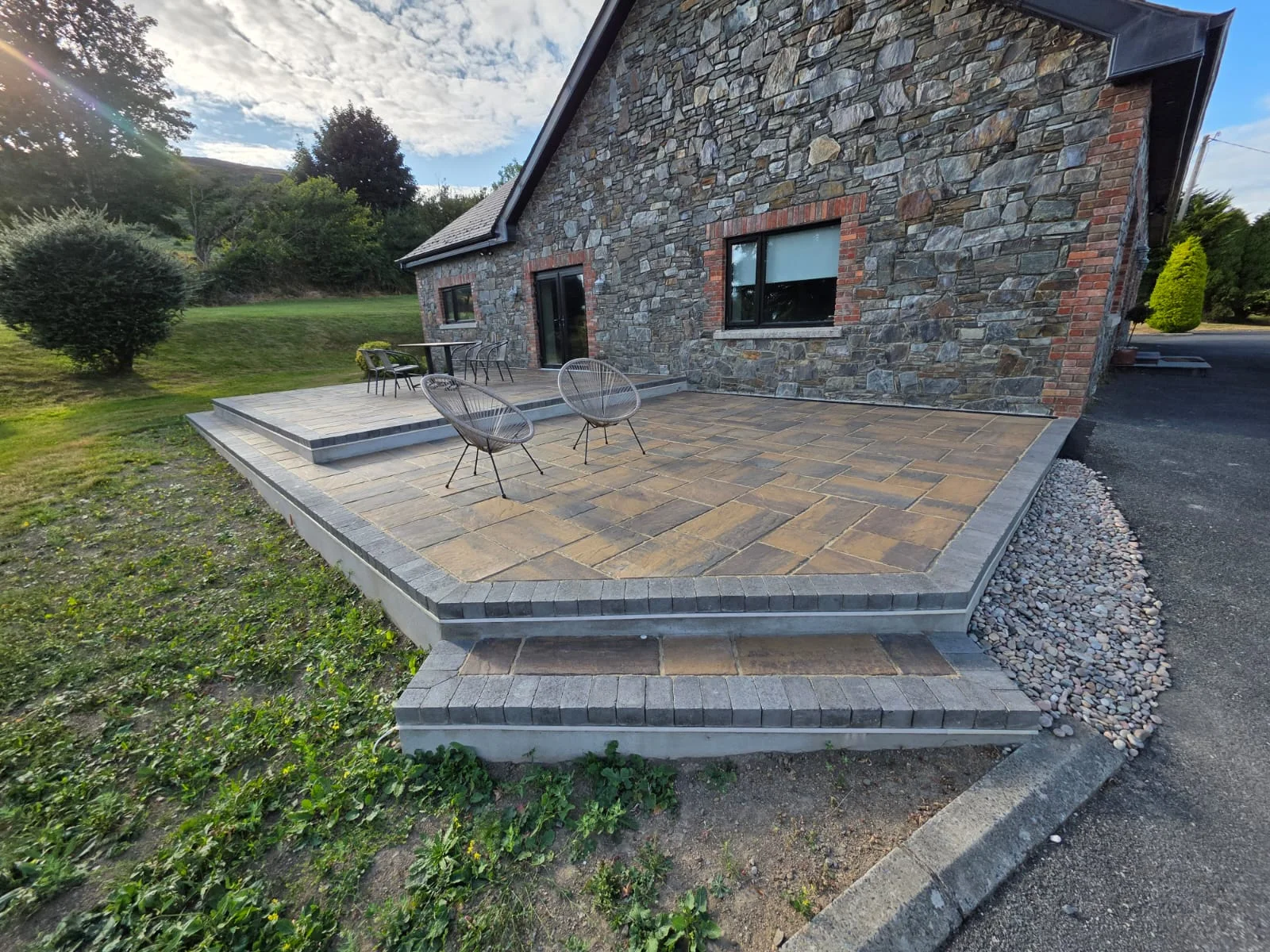
A stone sample can look lovely on the kitchen table and quite different outside after rain. Before choosing paving, steps or a garden wall, look at the material where it will actually be used. The stone type is one decision. The surface finish, size, layout and preparation matter too.
Limestone, sandstone or granite?
The Geological Survey Ireland describes limestone, sandstone and granite as building materials with different origins and working characteristics. Limestone can be cut and carved. Sandstone is a sedimentary stone that can also be worked into building stone. Granite is an igneous stone used for hard-wearing finishes. Those broad descriptions are a starting point, rather than a specification for every product sold under those names. Read the Geological Survey Ireland construction materials guide.
For your garden, compare actual products from the supplier. Two limestones can have different colours, finishes and suitability. A supplier should be able to identify the product, its origin and the applications for which it is supplied. Irish stone and stone bought from an Irish merchant are not necessarily the same thing.
Take the sample outside
Put samples beside the house, existing paths and any stonework you plan to keep. Look at them in daylight and when wet. A small colour difference can become more noticeable across a large paved area.
Ask to see a completed installation of the same product and finish, if one is available. Check whether the sample represents the range of colour in the batch. A single hand-picked piece cannot show every variation you might receive.
Ask about the finish as well as the stone
Where will people walk? A sheltered decorative feature has different requirements from a wet step or an exposed patio. Ask the supplier for the product’s documented suitability for external paving, its slip-resistance information and any restrictions on use. Avoid choosing solely from a photograph.
Discuss the route from the house, furniture space, thresholds and changes in level during the site visit. The paving layout needs to work with drainage and the surrounding garden. The base and installation method should follow a suitable specification for the site and the particular product, rather than a single depth copied from an online guide.
Compare complete quotes
The price of the stone is only part of the project. Ask whether the quote includes lifting existing surfaces, excavation, disposal, supporting layers, drainage, edging and finishing. Confirm the product and finish in writing, along with how variations or substitutions will be agreed.
Keep some spare pieces if practical, and ask for the supplier’s care instructions. Check cleaning products against those instructions before using them. Advice for one material can damage another.
See an alternative in a real local garden
Natural stone is one option. Our Haggardstown porcelain patio shows another: 80 m² of pale porcelain paving, a contrasting dark border and raised beds connecting the house and garden building. The before, during and after photographs show how the layout changed, rather than just the finished surface.
If you are weighing up materials for your own garden, explore our patios and decking service or arrange a free site visit. Bring samples, photographs and the questions you want answered before committing to a finish.
Reviewed 3 October 2026. Sources linked above; pricing, specification and permissions depend on the individual project.